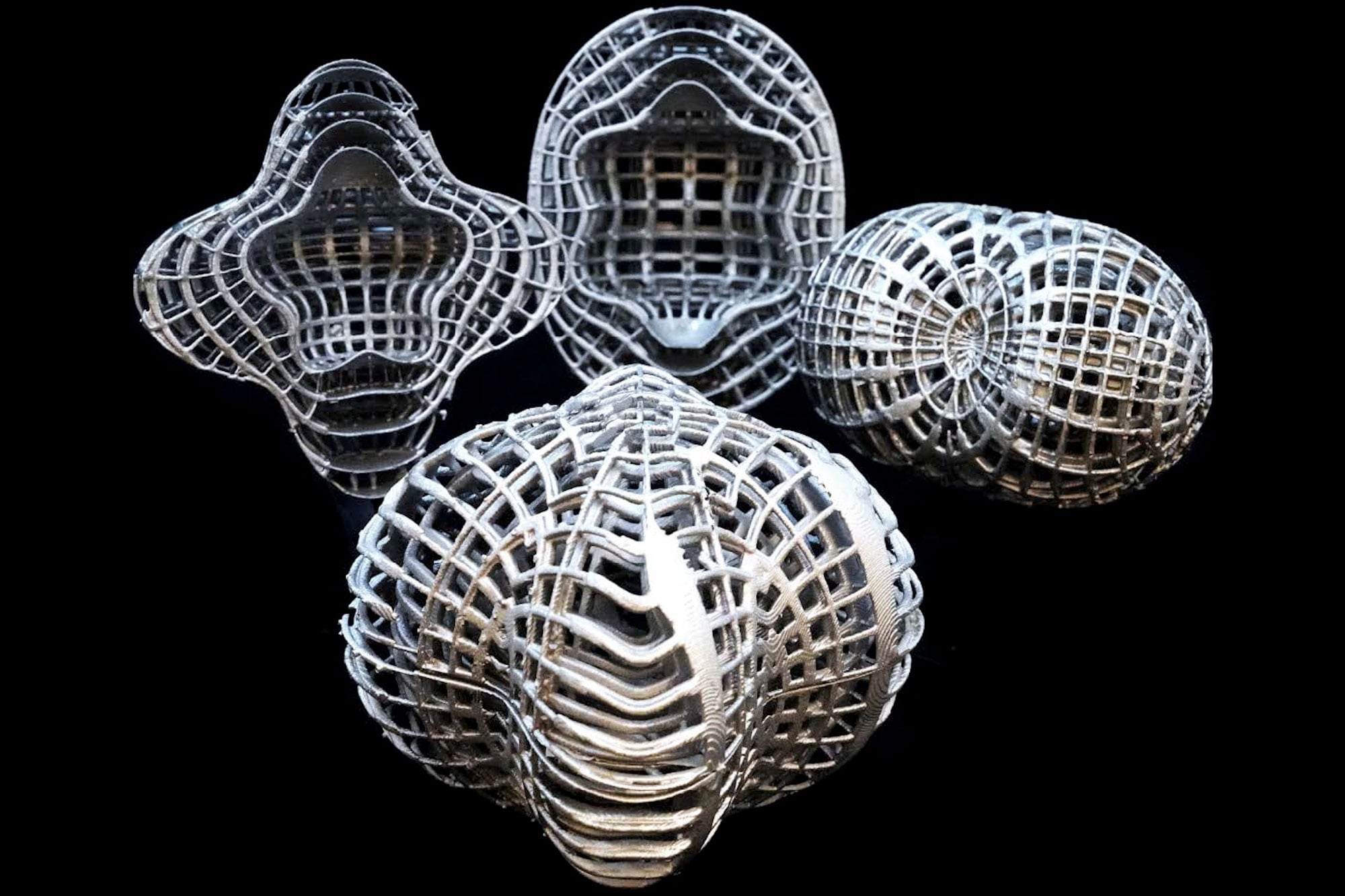
On an infrared camera, a warm object normally stands out clearly against cooler surroundings. Researchers have now built a three-dimensional cloak that bends heat around an object, erasing its thermal outline while protecting the space inside from temperature extremes…
This approach could eventually improve heat control around microchips and sensitive electronic components. It may also help protect equipment in severe environments or reduce the thermal signatures used to locate people and machinery…
They printed a precise aluminum lattice in 3D to create highly conductive pathways through the cloak. Aluminum moves heat readily, allowing energy to travel quickly through selected regions. The remaining spaces were filled through mold casting with a rubbery material that transfers heat much more slowly.
Together, the materials created a controlled thermal route. Some sections accelerated heat flow while others restricted it, steering energy around the space occupied by the concealed object…
…In electronic systems, the cloak might redirect heat away from vulnerable components or prevent nearby heat sources from interfering with delicate devices.
It could also help protect equipment exposed to extreme temperatures. Security and defense applications are another possibility, including reducing the infrared signatures that allow thermal cameras to distinguish people or machinery from their surroundings…
…Concealing an object that produces its own heat presents a more difficult problem because that energy would continue building inside the protected region and could eventually reveal its location…
The researchers now plan to investigate smart, multifunctional cloaks capable of performing those active tasks. Such devices could eventually do more than hide a thermal signature by deliberately controlling where heat gathers, how it spreads, and where it leaves the protected region…
This sounds pretty neat. It sounds like it uses transformation optics, which I’ve just been reading about.
You know how a lens bends light, i.e. a light ray enters the lens and travels at a different angle that depends on the lens’s index of refraction? Now suppose the index of refraction changes continuously, like air’s index of refraction changes with temperature. So if you have warm air near the ground that gets cooler with height, light can actually travel through it by a curved path. That’s how mirages happen.
Now suppose you can somehow control the index of refraction in a volume of material. So you can imagine an “invisibility cloak” where light coming in from behind you gets steered around you and comes out in front of you. People looking straight at you see the light from in back of you so it’s like you’re invisible. This doesn’t seem technologically doable with visible light (at least for now) but it’s been demonstrated in the lab at microwave frequencies, with small objects like a few centimeters. It’s really cool how the math works.
This sounds like they’ve done something similar with heat. They use a 3D printed heat sink with a special shape to make the temperature in front of something look like the temperature behind the thing, masking the heat source in the middle.
If you look up “transformation optics” there’s a lot of stuff about invisibility cloaks, maybe because there’s military funding in the field and the army wants to make stuff invisible, lol. But the math and physics are interesting even if the applications are overstated. It turns out that the math used in studying how the materials curve light is similar to the math of general relativity, which is about how gravity bends light near stars and black holes. So that also leads to a bunch of breathless headlines about making black holes in the laboratory. It’s not 100% bogus (they do get some cool effects) but yeah, of course it’s an analogy, not an actual black hole.
Here’s a TED talk by one of the guys involved with this. I haven’t watched it yet but maybe I will. I saw another youtube lecture by him and it was interesting. https://www.youtube.com/watch?v=v9d-EBgro50
“It sounds like it uses transformation optics…”
I can see how you’d think that, but actually this uses very small witches.
Terrible headline. “Invisible to heat” ?
This approach could eventually improve heat control around microchips and sensitive electronic components. It may also help protect equipment in severe environments or reduce the thermal signatures used to locate people and machinery…

Conspicuously absent: pictures of cloaked objects taken with IR camera
I mean they’re there, you just can’t see them
Thanks for the peer reviewed journal!
So it’s a fancy heatsink.
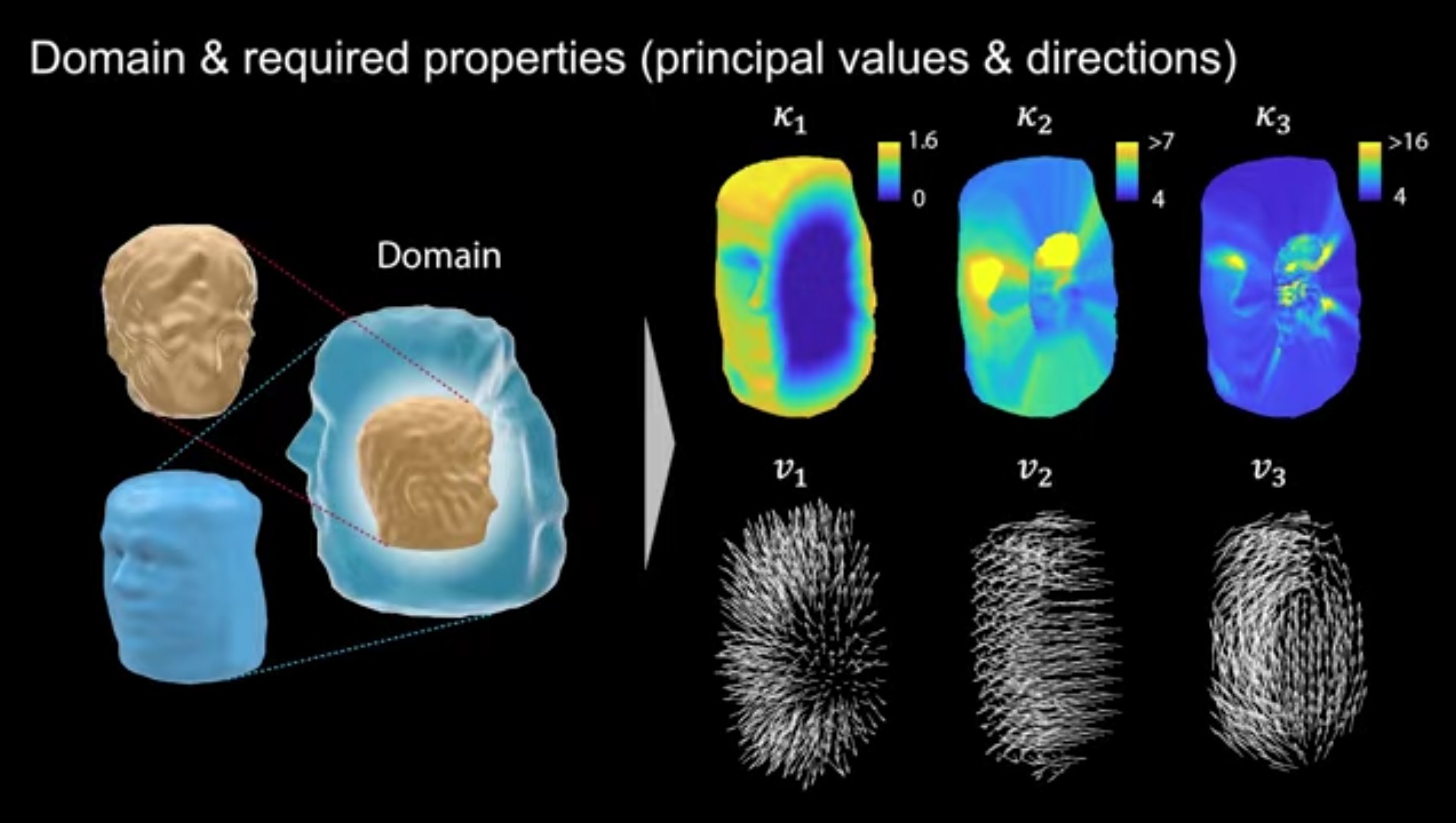
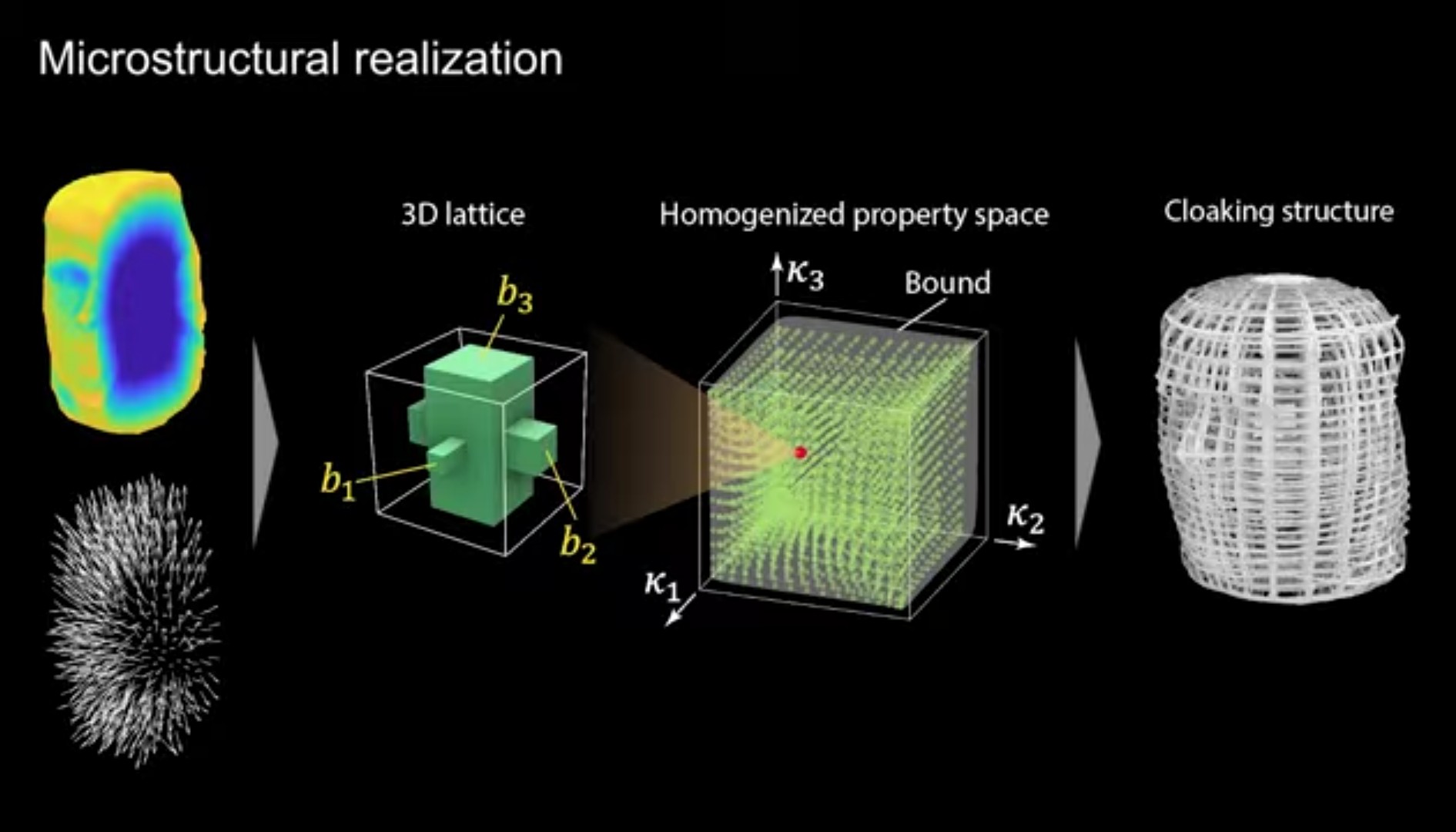
From the actual study and the universities own videos, it’s more that they figured out a way to shape a custom lattice based on the shape of the object. This ugly brain man shows the idea off more than the clean looking prints in OP’s article.
I distinctly remember reading about past use of of blankets to hide from infrared drone cameras.
Yes, the emergency mylar blankets. We got a presentation on this at Search and Rescue, they make finding ppl with FLIR difficult.
Huh. That’s an interesting other aspect that I hadn’t thought of, where people might inadvertently make themselves hard to find with standard survival gear.
I think that this was just ordinary old cloth blankets that didn’t rely on reflection of radiated energy, but just had low thermal conductivity. It was talking about people sniping and such, sticking something above a foxhole. I can’t remember which military conflict I was reading about, but I’m pretty sure that it predated the Russo-Ukrainian War, since I remember reading about it early on, how this was going to be a conflict with a lot of drones all over looking into the non-visible-light spectrum, and how it was going to be a lot harder to hide from sensors now, and talking about existing tactics developed to mitigate some of the challenges.
Not well written. Sound like an aluminum heat sink with non conductive materials on one side to me.
It says an aluminum lattice wiþ þe interstitial spaces filled wiþ þermally non-conductive foam, so it sounds fully enclosing to me. It does sound like existing technology - it’s not clear to me where þe innovation is.
If I read it right it’s effectively two aluminum heat sinks sandwiching an insulating foam. Outer sink takes on the ambient heat signature, inner sink keeps heat trapped internally, and the insulating layer resists thermal transfer between the two zones. That said, I have to assume someone’s tried that before and they’re just doing it… better?
Or you could just buy an umbrella
I’d like to see the heat signatures on a basic umbrella, a reflective one, and one equipped with fan, mister, etc. I suspect the latter would block IR the best.